42 food labels low fat
Don't Be Fooled By Low-Fat Food Labels - SuperFoodsRx ... For a product to use the term "low-fat" on its label and advertising, its total fat content must be 3 grams or less. Two-percent (2%) milk really isn't low-fat because it has 5 grams of fat per serving - including 3 grams of the artery-clogging saturated fat! In fact, 35 percent of the calories in a serving of 2% milk come from fat. Understanding Food Terms - American Cancer Society Low. How you might see it on a label: low-fat, low-sodium, low-cholesterol, low-calorie What it means: This term can be used on foods that can be eaten often and you still won't get more than the recommended amount of that nutrient. The nutrients that can be described with this label are: Fat; Saturated fat; Cholesterol; Sodium (salt)
The Ultimate Low-Fat Food List (with Low-Fat Diet Menu Ideas!) "Fat-free" or "low-fat" diet foods are often consumed in hopes to lose weight and reduce the risk of heart disease. But people often misinterpret all low-fat food as a good indicator of health. Let it be known that fat is an integral component of a healthy diet, especially when balancing healthy fats with protein and high-fiber carb sources. And unless medically advised, restricting fat can be ...
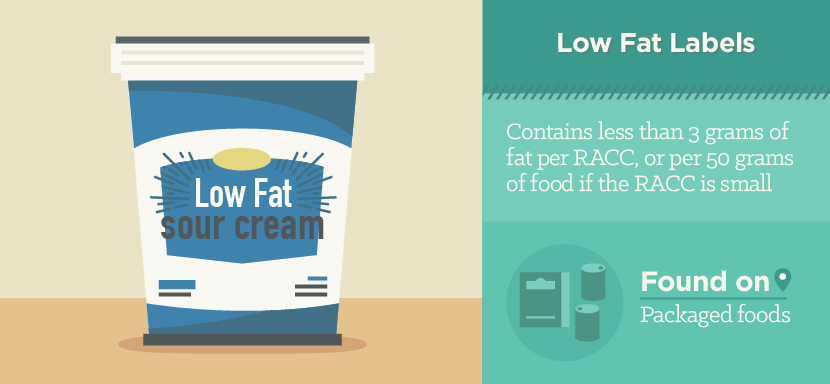
Food labels low fat
Food Packaging Claims - American Heart Association "Very Low" and "Low" means the food has a little more than foods labeled "Free." "Reduced" or "Less" mean the food has 25% less of a specific nutrient than the regular product. "More," "Fortified," "Enriched," "Added," "Extra," or "Plus" means the food has 10% or more of the Daily Value (DV) than the regular product. Food Labels | CDC If you eat the whole thing, you are eating 8 times the amount of calories, carbs, fat, etc., shown on the label. Total Carbohydrate shows you types of carbs in the food, including sugar and fiber. Choose foods with more fiber, vitamins, and minerals. Choose foods with lower calories, saturated fat, sodium, and added sugars. Avoid trans fat. Fat labels - My Fearless Kitchen Percent fat free. Foods that are labeled with something like "90% fat free" must meet the criteria for the "low fat" label (3 grams of fat per serving or less). If the claim is "100% fat free," it must meet the criteria for a "fat free" label (less than 0.5 grams of fat per serving).
Food labels low fat. Reading Food Labels | ADA - American Diabetes Association Put food labels to work. The Nutrition Facts labels on foods are really the key to making the best choices. We'll cover the basics so that these labels make shopping easier for you. You've heard it all. From carb-free to low-carb, to whole and empty carbs, it's hard to know what it all means. Blood sugar highs and lows aren't always ... Understanding Food Labels, Low Fat, Sugar and Salt Saturated fat -. High: more than 5g of saturated fat per 100g. Low: 1.5g of saturated fat or less per 100g. Sugars -. High: more than 22.5g of total sugars per 100g. Low: 5g of total sugars or less per 100g. Salt and sodium -. Salt is also called sodium chloride. Sometimes, food labels only give the figure for sodium. Food Labels: Fat & Cholesterol | Home & Garden Information ... Be aware that the word "low-fat" on the label doesn't automatically mean that a food is "low-calorie." "Low-fat" and "fat-free" foods, such as muffins and desserts, often contain more sugars and as many calories as the regular versions. You don't have to eat all low-calorie and low-fat foods. What Food Labels Mean—and Don't - Consumer Reports For example, a study in the Journal of the Academy of Nutrition and Dietetics found that shoppers gravitate toward labels such as "low sodium," "low fat," and "reduced sugar," but foods and drinks ...
Low-Calorie Nutrition Label Requirements - LabelCalc For entire meals and main dishes, the calories cannot exceed 120 per 100 grams. Calorie Free: In order for a food to be deemed free of calories, it must contain no more than 5 calories per RACC and per labeled serving. Common examples of calorie free foods include diet soda, chewing gum, and shirataki noodles. 'Low fat' or 'Low sugar' label fools people into buying ... The fat content of low-fat chocolate milk is less than full-fat chocolate milk, but it's higher in sugar than regular milk and many other beverages. To think that the low-fat label makes it a healthy choice is not necessarily true. Part of this is due to how the FDA allows labels to be used in different ways for different foods. Taillie explains. How to Read a Food Label - WebMD One serving of a "low-fat" food can have a maximum of 3 grams of fat. A serving of a "low-calorie" food can have a maximum of 40 calories. A serving of a food labeled "reduced" must have 25% less... PDF Food Label Tip: How to Choose Foods Low In Saturated Fat ... Fat-free milk is a better choice. Potato Chips Microwave Popcorn These food labels are for one serving of potato chips (about 12 chips) and one serving of microwave popcorn (1 cup). Microwave popcorn has the lowest % of saturated fat and the lowest amount of trans fat. It has 5% saturated fat and 0 grams of trans fat.
How to Read Food Labels for a Heart-Healthy Diet | Johns ... Yogurt: "I choose a low-fat brand that's marketed as 'diabetes friendly' on the label, which means it's low in carbohydrates. You get all the benefit of yogurt with far fewer carbs. Greek yogurt is also a good choice because most brands have fewer carbs than regular yogurt. Compare the labels—some low-fat yogurts contain a lot of added sugar. What does low fat, light mean on a food label? - Common ... What the Labels Mean - Calorie Control Council LOW-FAT 3 grams or less of total fat for a given reference amount LOW-CALORIE no more than 40 calories for a given reference amount (except sugar substitutes) LOW-CHOLESTEROL 20 milligrams or less cholesterol and 2 grams or less of saturated fat for a given reference amount How to read a food label - TODAY.com Here's how: regulations for a "low" or "reduced" nutrient on a label only refer to changes from the original food, not for a whole food category. While the particular single nutrient might be ...
How To Decipher Grocery Labels | Care2 Healthy Living
Low-Fat Foods - American Cancer Society Low-fat foods to choose from Dairy and dairy-like products Low-fat (1%) or fat-free (skim) yogurt, cottage cheese, or milk Neufchatel or "light" cream cheese or fat-free cream cheese Fat-free American cheese or other types of fat-free cheeses Fish, meat, poultry, and other protein Egg whites or egg substitutes

Good Fat Vs. Bad Fat: What Are The Best Fats To Include In Your Diet?
How to Understand and Use the Nutrition Facts Label | FDA Nutrients to get less of: Saturated Fat, Sodium, and Added Sugars. Saturated fat, sodium, and added sugars are nutrients listed on the label that may be associated with adverse health effects - and...

Fat free and 100% natural: seven food labelling tricks exposed
Low Fat Nutrient Content Claim - LabelCalc In fact, a recent global study of healthy eating habits reported that 25% of North Americans felt that a "low-fat" label was very important to them when deciding whether to purchase a food product. Furthermore, 59% of North Americans reported that reducing their fat intake was a strategy they used to lose weight.

Fat free and 100% natural: seven food labelling tricks exposed
Low Carb Guide to Understanding Nutrition Labels According to labeling laws in the U.S., if a food contains less than 0.5g of trans fat per serving, the label can say 0g, so be sure to read the list of ingredients. You can spot trans fats by the words "hydrogenated" or "partially hydrogenated" with oils. Sugar-free or Low-carb: Don't be fooled by clever packaging and slick marketing.

How To Read Food Label – Healthy Tips And Tricks
PDF low-fat higher-fiber Less than .5 grams of fat per serving Reduced or Fewer Calories: At least 25% fewer calories per serving than the reference food Sugar Free: Less than .5 grams of sugar per serving Food labels are required by law to follow specific guidelines so the knowledgeable consumer knows what is inside the package and can make wise food buying decisions.
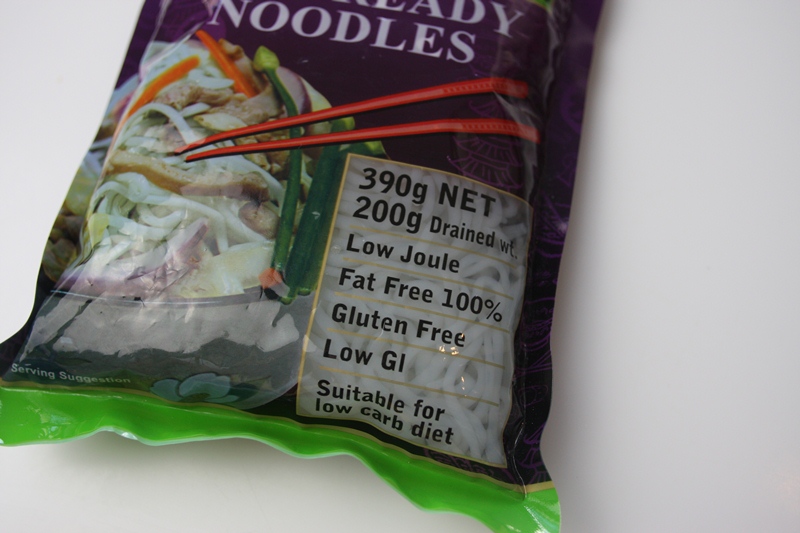
Product Review: Konjac (low-cal) noodles - Catherine Saxelby's Foodwatch
How to Read Food Labels | Mark's Daily Apple Food type or ingredients: whether it contains grains, animal products, nightshades, added sugar, etc. Macronutrient profile: low-carb, low-fat, keto; How ingredients were grown or harvested: organic versus conventional, wild versus farmed, and so on; Decoding food labels can be tricky, though.
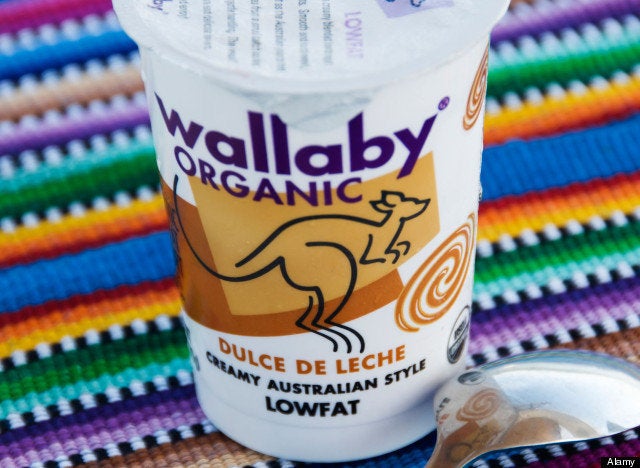
Beware of These 4 Food Label Claims | HuffPost
Nutrient Claims on Food Labels | Home & Garden Information ... (If food is not low in total fat, the label must state total fat in conjunction with the fiber claims.) High fiber: 5 grams or more: Good source of fiber: 2.5 grams to 4.9 grams: More or added fiber: At least 2.5 grams more* Sodium Claims: Sodium free or salt free: Less than 5 milligrams sodium: Very low sodium: 35 milligrams of sodium or less ...

Foods Rich in Omega-3 Fatty Acids and Antioxidants | Healthfully
Understanding sugar content on food labels - Diabetes Care ... Mar 30, 2018 · Eggs are a very healthy option for people with diabetes. They’re low in calories (one egg contains only 80 calories). Eggs are also low in fat and high in protein and full of essential vitamins and nutrients. Check out these 5 great reasons to include eggs in your diabetes diet!
/GettyImages-498768990-5bbcc9dec9e77c0051cf8ebf.jpg)
34 What Does Fat Free Mean On A Food Label - Labels Information List
Don't Be Fooled By These Food Labels | Health.com These products often contain sugar alcohols, which are lower in calories (roughly 2 calories per gram, compared to 4 per gram for sugar), but compare labels to see if the sugar-free version is any...

Jif peanut butter nutrition
How to read food labels? : nutrition Hello, I have a specific question about food labels. I have some bread that says 13g of carbs and underneath that it has the categories dietary fiber, total sugars and added sugars. The problem I have is the categories that make up carbs don't add up to 13g. ... Keto,low carb,low fat and multiple many others. What is the point? Right now we ...

How To Read Nutrition Labels : Article - GourmetSleuth
Food Labels: What does the 'low fat' label actually mean? To get you up to speed, a product can only use the low-fat claim if it has less than 3g fat per 100g (and if it's a liquid, it has to have less than 1.5g fat per 100g). In essence, that means that just because something is labelled as low fat, it doesn't automatically make it healthy - it could be bursting with sugar or salt instead.

Kellogg's Frosted Flakes Cereal | Hy-Vee Aisles Online Grocery with Nutrition Label For Frosted ...
Fat free and 100% natural: seven food labelling tricks exposed Fat free and 100% natural: seven food labelling tricks exposed. We need to look past the colours, pictures and cleverly crafted claims. Art Allianz/Shutterstock. If you're confused by food ...

Fat free and 100% natural: seven food labelling tricks exposed
13 Misleading Food Label Claims and How Not to Be Tricked The use of the term low-fat is governed by the FDA, which dictates that products must not contain more than 3 grams of fat per 50 grams. For meals and main dishes, foods are expected to contain no more than 3 grams of fat per 100 grams, and more than 30 percent of the calories cannot come from fat. 8. Label Says Made With Whole Grains
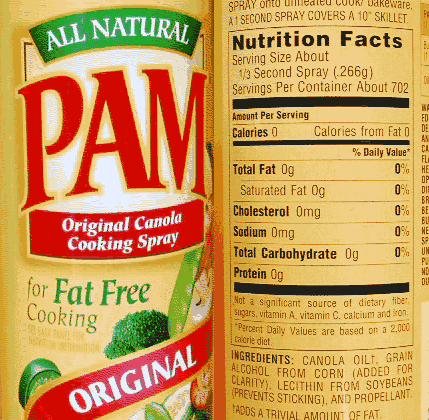
Food Labels -- Nutrition information and misinformation (Page 3 of 3)
Fat labels - My Fearless Kitchen Percent fat free. Foods that are labeled with something like "90% fat free" must meet the criteria for the "low fat" label (3 grams of fat per serving or less). If the claim is "100% fat free," it must meet the criteria for a "fat free" label (less than 0.5 grams of fat per serving).

USDA Issues New Rules On Meat Packaging - Redorbit
Food Labels | CDC If you eat the whole thing, you are eating 8 times the amount of calories, carbs, fat, etc., shown on the label. Total Carbohydrate shows you types of carbs in the food, including sugar and fiber. Choose foods with more fiber, vitamins, and minerals. Choose foods with lower calories, saturated fat, sodium, and added sugars. Avoid trans fat.

Fat free and 100% natural: seven food labelling tricks exposed
Food Packaging Claims - American Heart Association "Very Low" and "Low" means the food has a little more than foods labeled "Free." "Reduced" or "Less" mean the food has 25% less of a specific nutrient than the regular product. "More," "Fortified," "Enriched," "Added," "Extra," or "Plus" means the food has 10% or more of the Daily Value (DV) than the regular product.
Post a Comment for "42 food labels low fat"